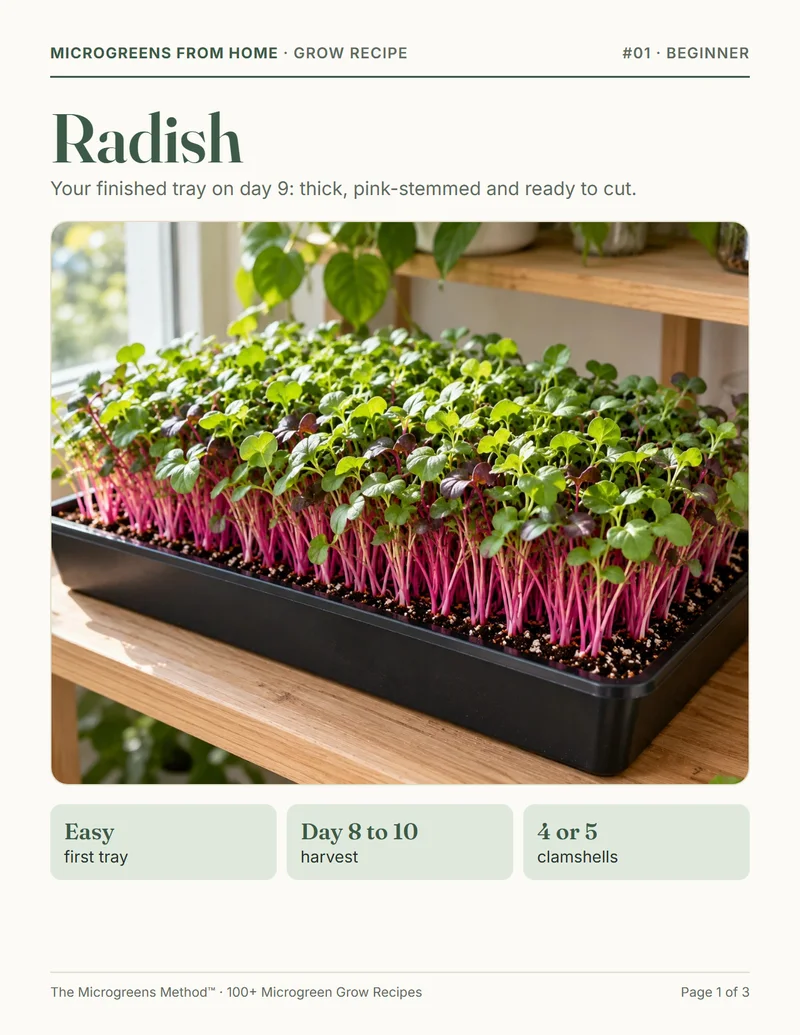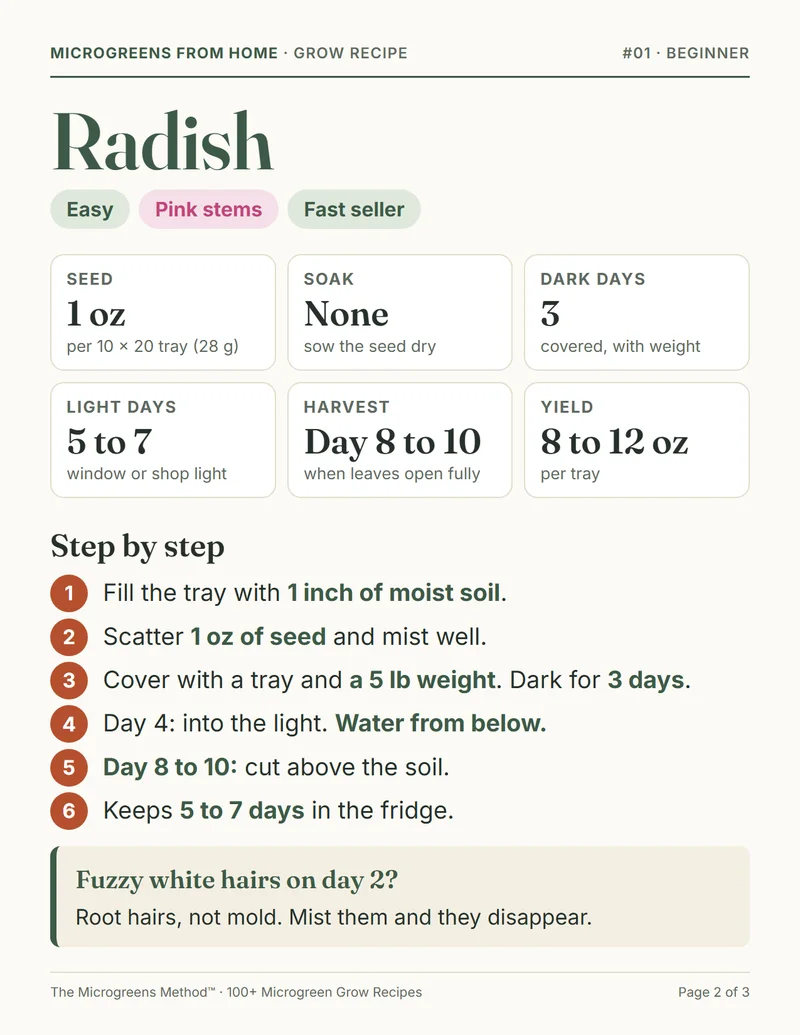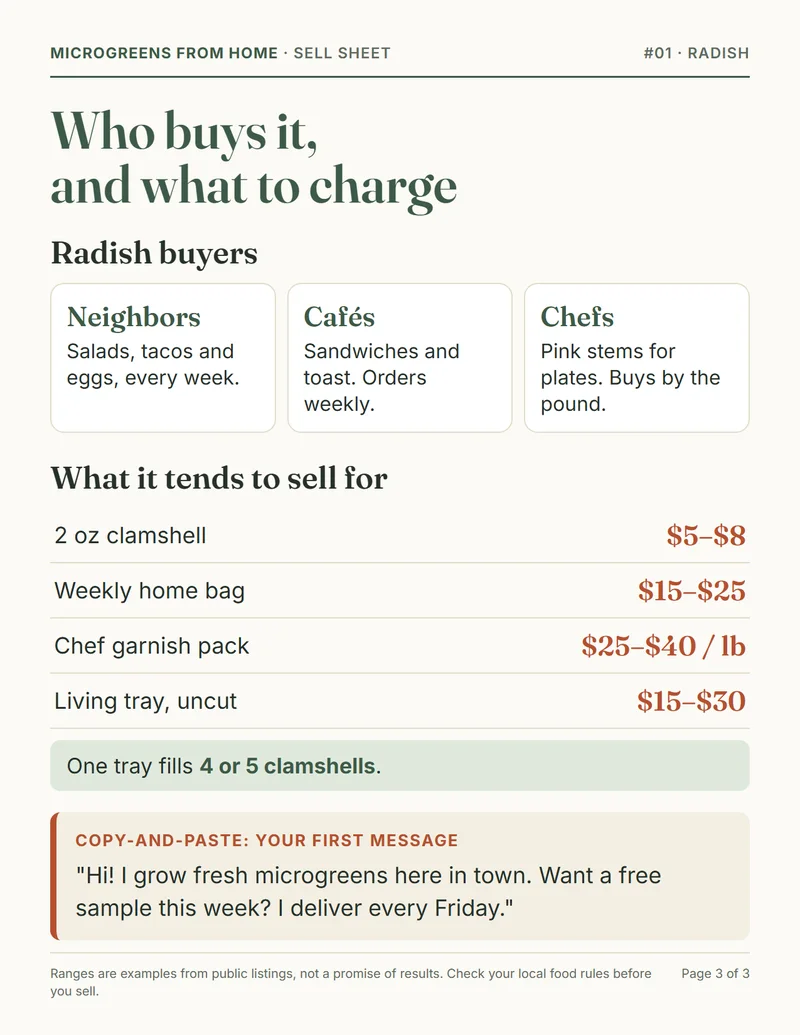


01
5 things, that's the whole setup
A container, soil, seeds, water and light. A sunny window is enough to get started.
Get 100+ Microgreen Grow Recipes and start tonight. Sow, grow, sell. No land, no experience needed.
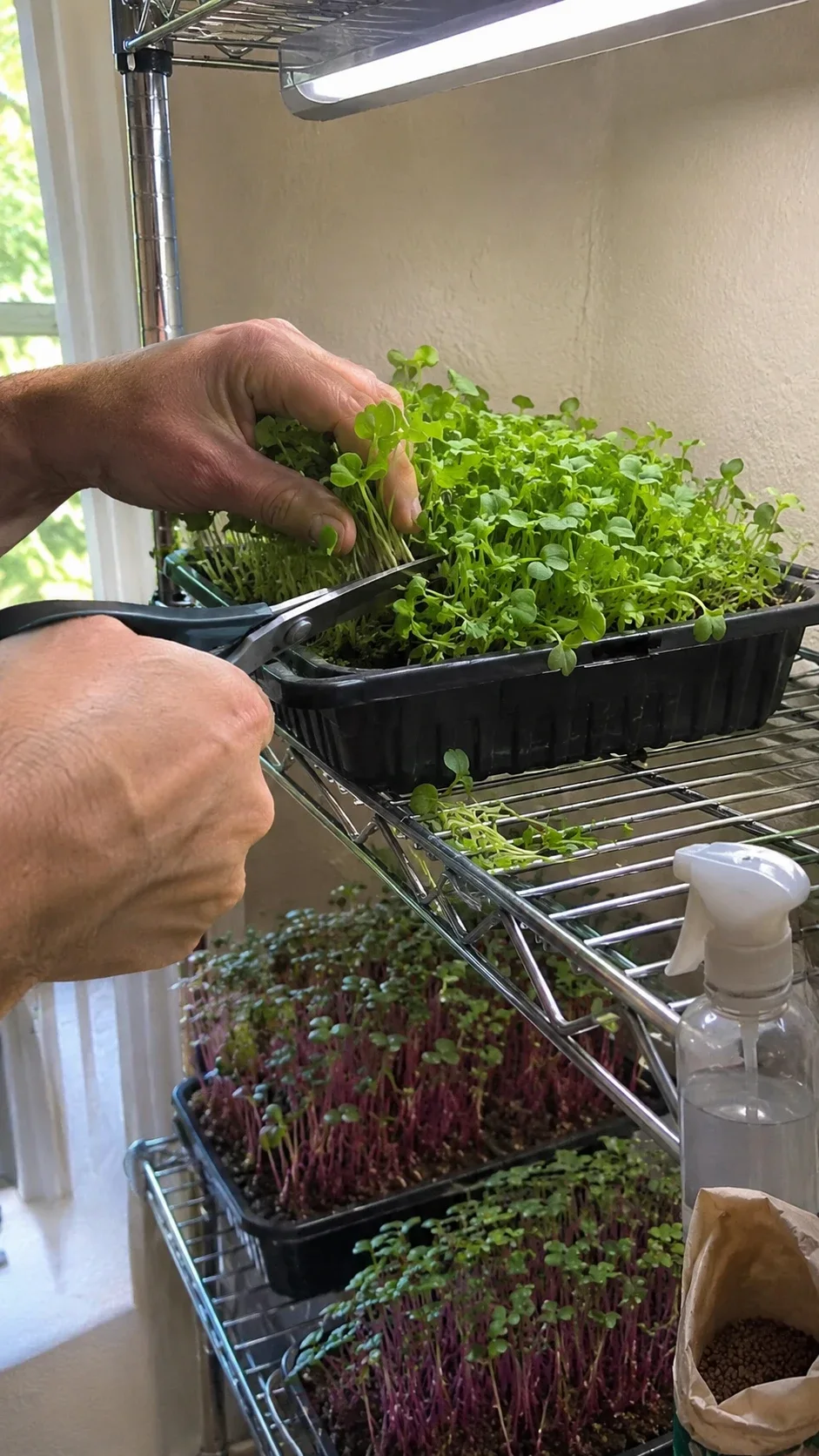
A baby vegetable plant, cut 7 to 14 days after you plant it. You scatter seeds thickly over a tray of soil, keep them in the dark for a few days, then give them light. When the first little leaves open, you cut them with scissors. They are the tiny greens chefs put on plates, and people toss them on salads, sandwiches, eggs and smoothies.
Radish, pea, sunflower and broccoli are the most common, and a whole tray fits on a kitchen shelf. You grow them, cut them, and hand them to people near you while they are still fresh. That is the whole product.
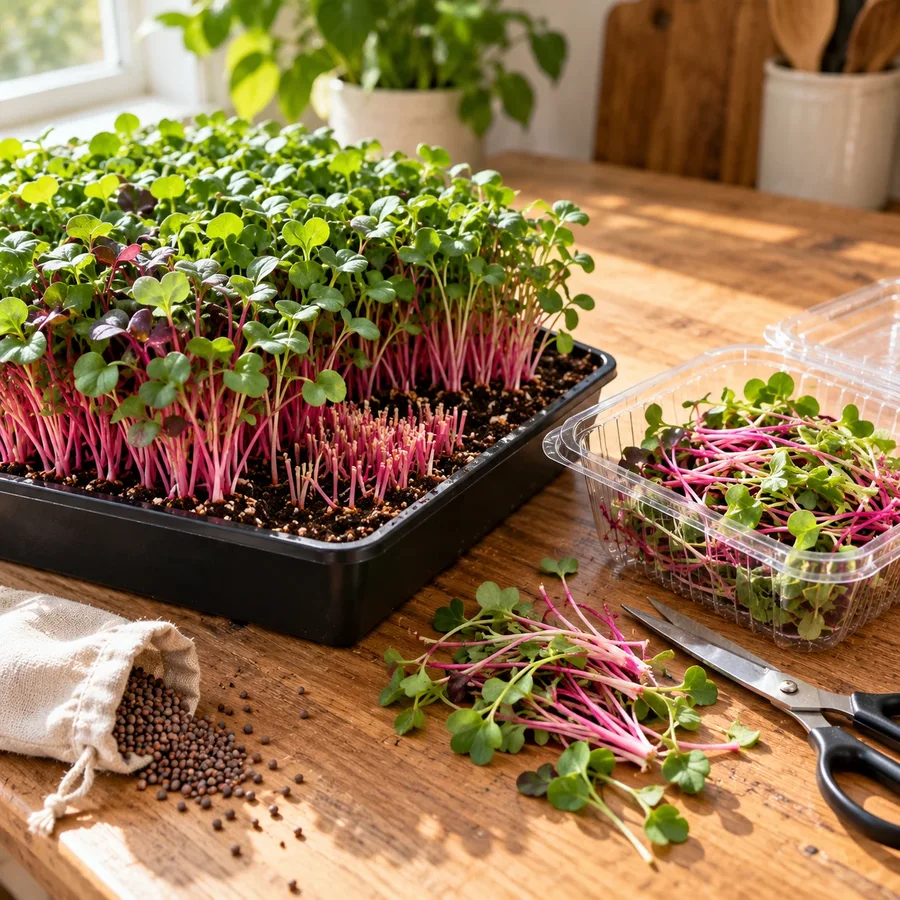
A container, soil, seeds, water and light. A sunny window is enough to get started.
Most varieties go from seed to harvest in one or two weeks, so you learn fast what grows well and what sells.
They get eaten in days, not months. The person who likes your first bag is already your next order.
You pick up another shift or a second part-time job, and the month still comes out the same way it did last month. Nothing you cut moves it.
A course, a kit, a side hustle sold like a get-rich-quick scheme. Nothing came of it, and what stayed with you was thinking you should have known better.
Fuzzy white mold overnight, a tray that falls over, seed wasted. You picture a shelf of trays gone bad, decide it's not for you, and never plant the first one.
Growing was never the hard part. It's cutting a full tray, looking at it on the counter, and not being able to think of one person to offer it to.
The problem was never you. It was that everyone told you to grow first and sell later.
Salad bags, fresh herbs, the little box of sprouts that goes bad in the fridge. That money leaves your grocery budget every week and you stopped questioning it. Stand on the other side of that same purchase and 4 things line up that almost no other way to earn extra income offers together.
2 growing trays, a bag of soil, a pack of seeds and a spray bottle. A sunny window does the rest for your first trays. Nothing on the list is a machine, and none of it needs land.
A tray takes a few dollars of seed and soil and sells for $15 to $30. Cut into clamshells, the same tray fills 4 or 5 of them at $5 to $8 each. Right now the grocery store is the one keeping that difference.
Store greens can sit for days before they reach the shelf. Yours are cut the morning you deliver, by someone your buyer knows by name. That is why a neighbor or a café picks yours over the store.
A neighbor who likes her first bag wants one every Friday. A café that puts your pea shoots on a sandwich needs them again next week. Microgreens get eaten in days, so the same people come back, and a handful of regulars becomes your weekly routine.
You do not need a green thumb and you do not need a business. Pick the door that sounds most like you.
Grocery money, fewer extra shifts, more evenings at home. Something steady you can do from home, that isn't an MLM and isn't another job.
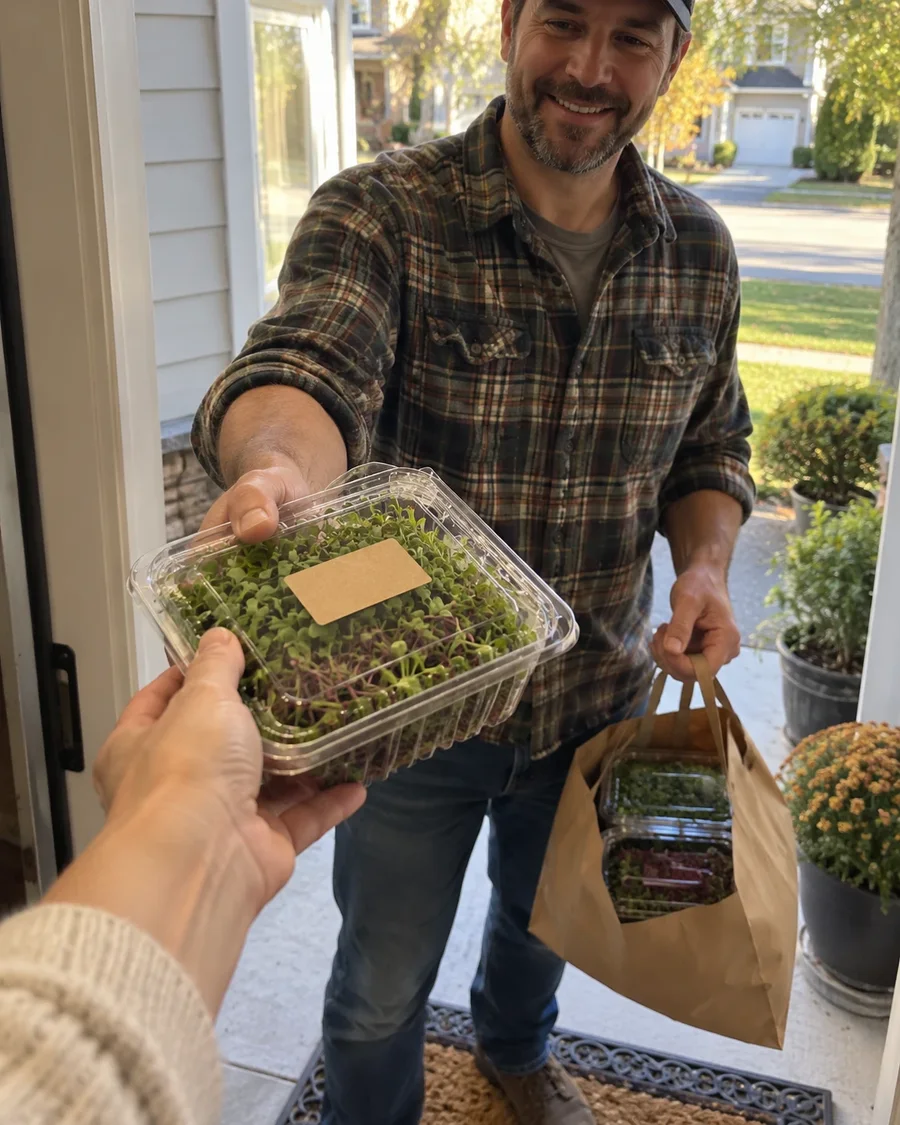
Your friends say your tomatoes and herbs are the best they've had because they like you, and you know exactly what that is worth. A neighbor handing you money every week is a different sentence, and it is the one that changes what you think your green thumb is for.
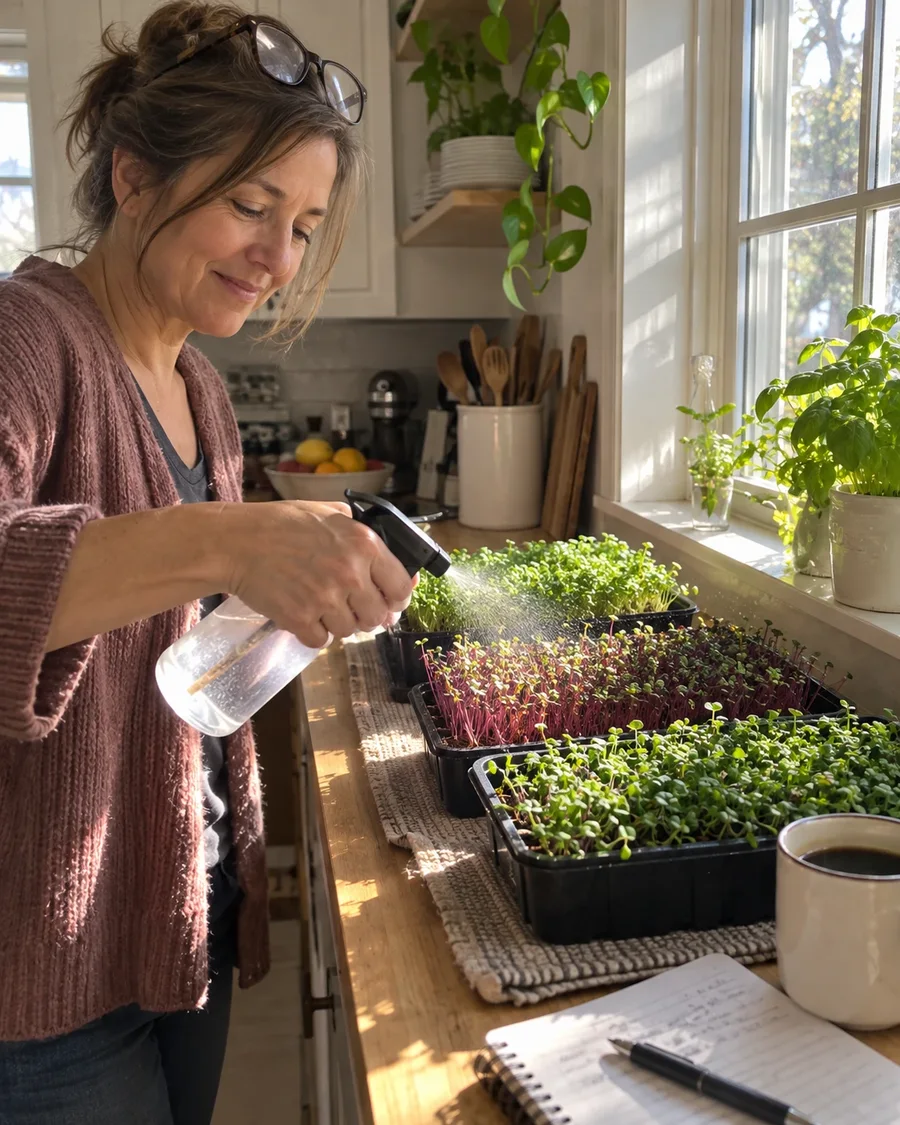
Maybe the kids grew up, or you retired, or you're done giving every evening to a 9 to 5. You want a small, rewarding thing to grow at your own pace. The work happens at a shelf, a few minutes a day, and the seeds do not know how old you are.
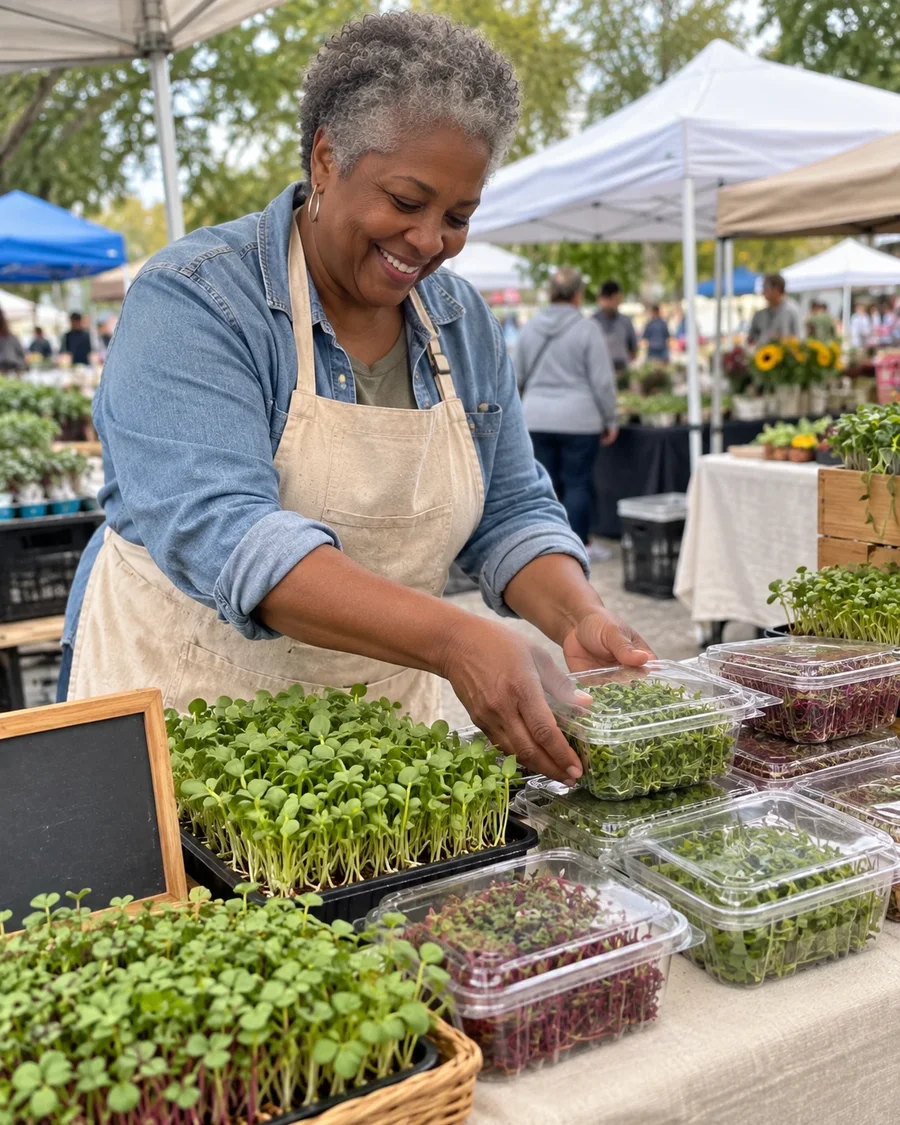
Pick one beginner recipe, like radish, and scatter the seed over one tray of soil. The recipe tells you exactly how much seed to use and how long to keep it dark. That amount is the whole difference between a thick, clean tray and one that molds on you.
Keep it dark for 3 or 4 days, then give it light and water it from below. If you can water a houseplant, you're already doing this part, and around day 8 to 12 you cut a tray that looks like it came from a farm.
The same weekend you sow it, tell a few neighbors or one café what's coming with the copy-and-paste scripts, and take their orders. Price it with the calculator, cut it the morning you deliver, and hand it over. Then do it again next week, for more.
The kit covers every microgreen type, organized by what you want to grow. Here's the rough range each one tends to sell for.
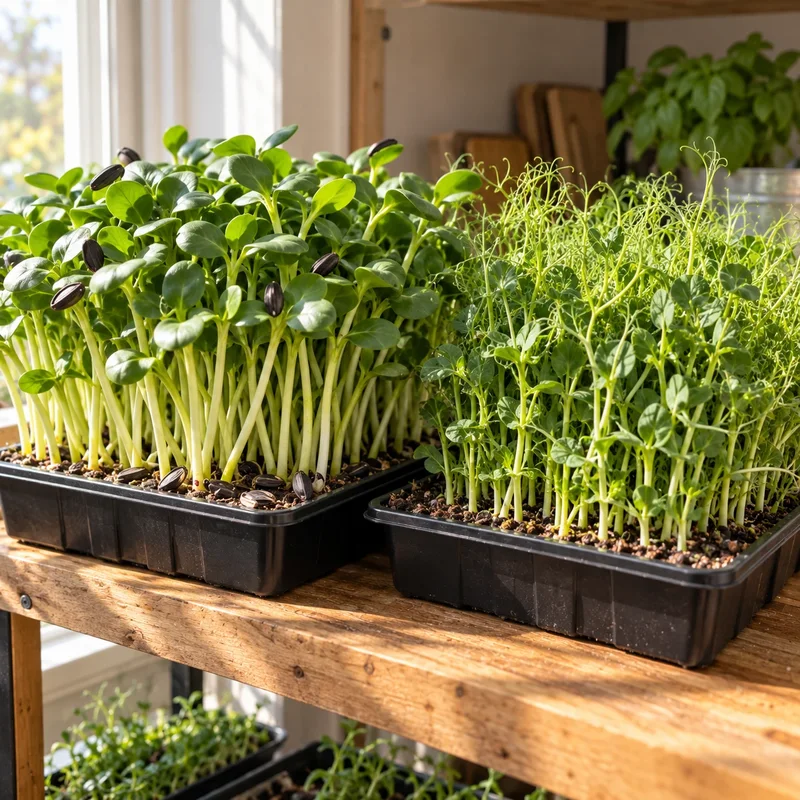
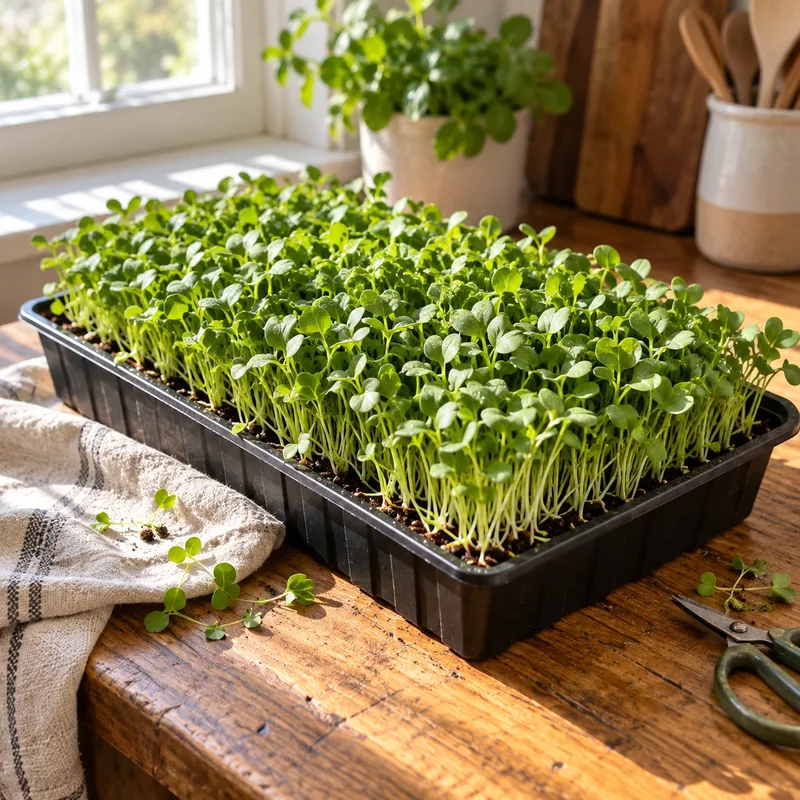 Sells for $15–$30
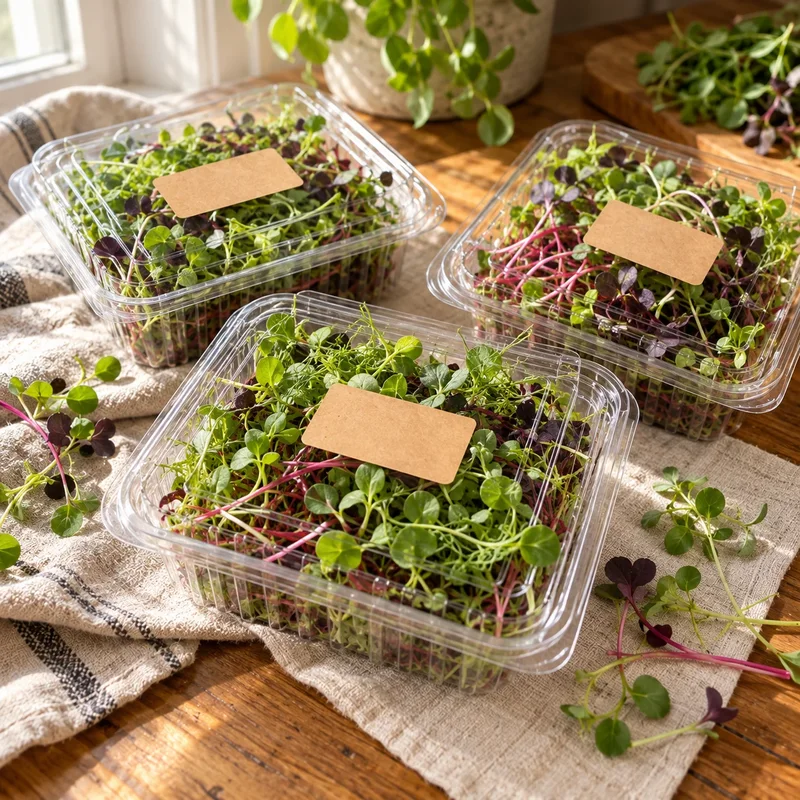 Sells for $5–$8
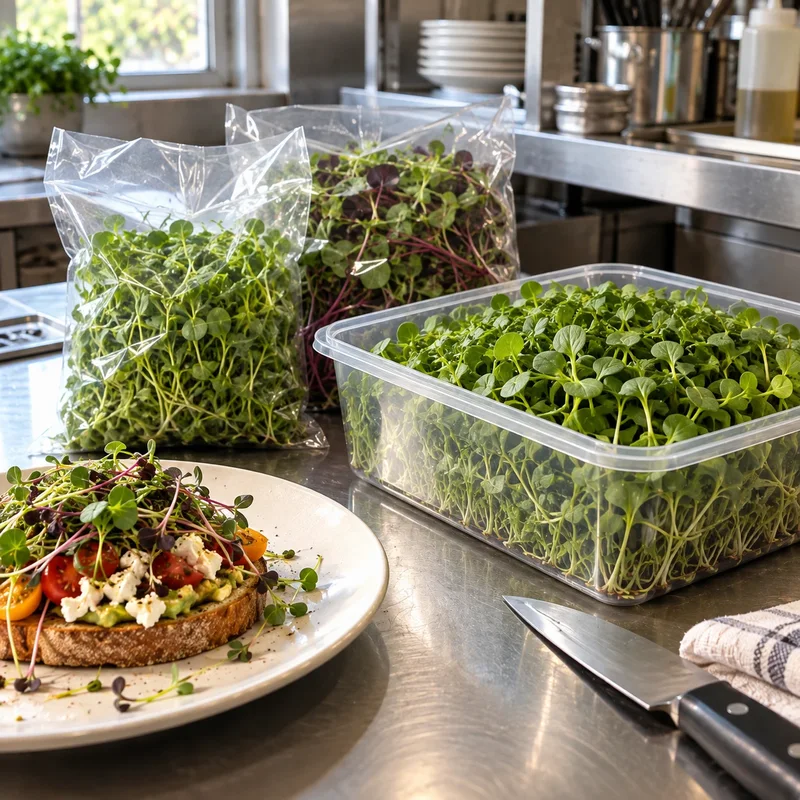 Sells for $25–$40 a lb
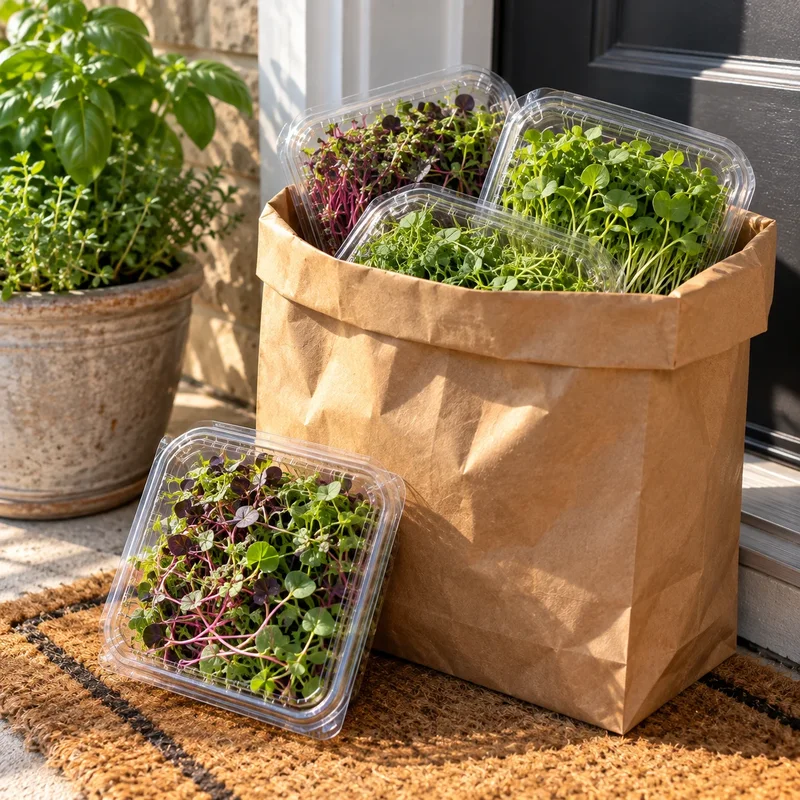 Sells for $15–$25
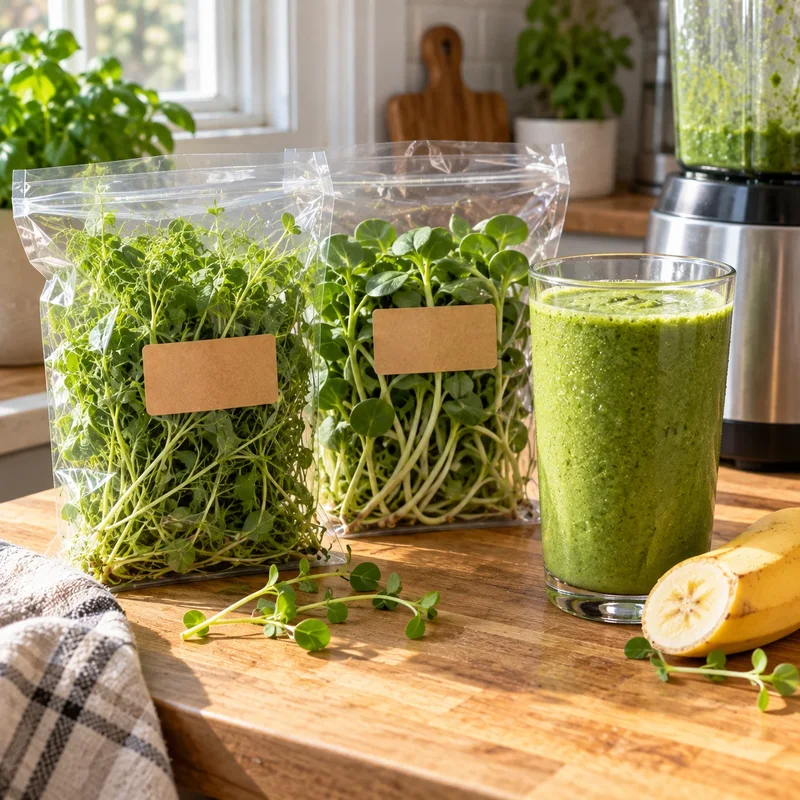 Sells for $6–$10
 Sells for $5–$9
Ranges are based on public farmers market, grocery and local grower listings, checked in September 2026. They're examples, not a promise of results. What you earn depends on your crops, your location and how you sell.
The recipes get you growing. These three solve what actually stops people from turning it into extra income: pricing, trust and finding the buyer. And you still get 5 more bonuses on top.
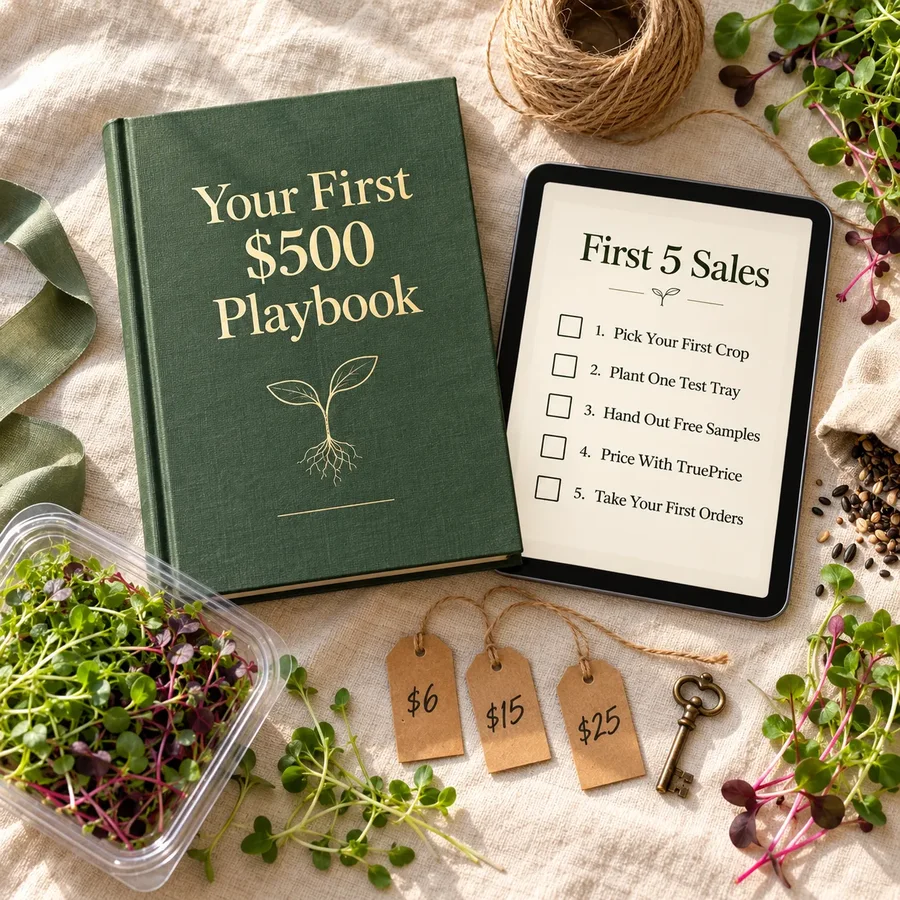
The exact roadmap to your first sales. What to grow first, what to say, who to offer it to, and in what order. It starts with the people already near you and ends at your first café that orders every week.
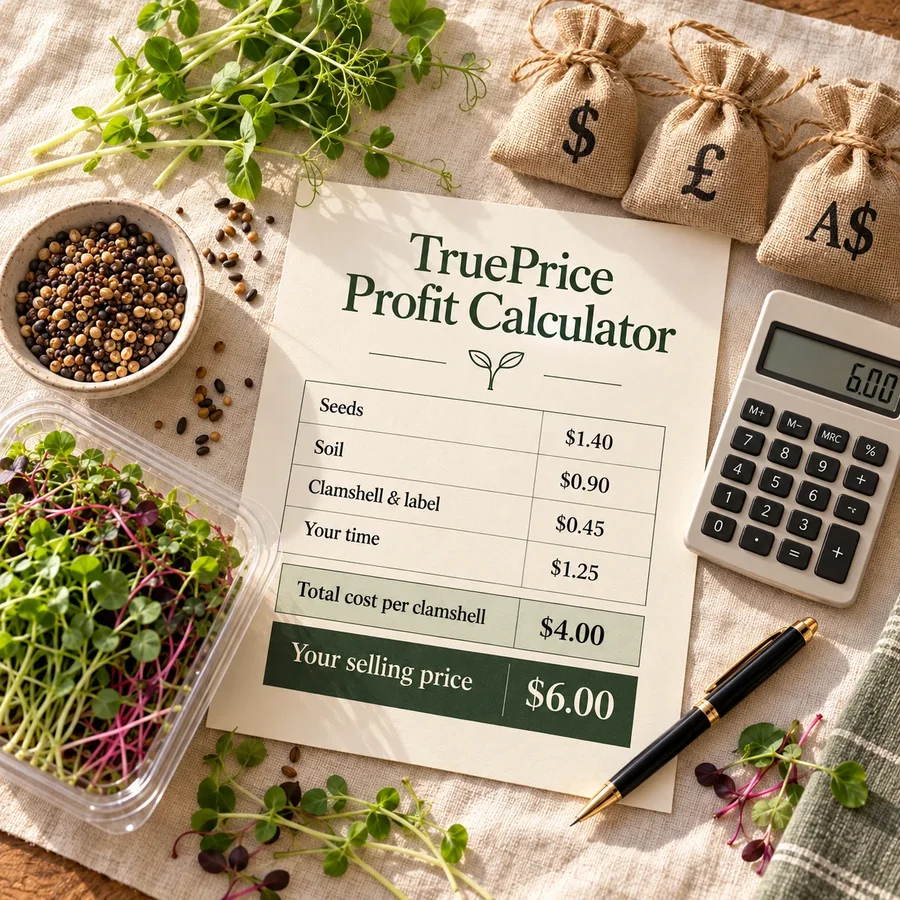
Prices a tray or a clamshell in 3 taps. Seed, soil, containers and your time counted in, plus a fair margin, so you get a number you can say out loud. It quotes a café's weekly order too, without you doing it in your head at the counter.
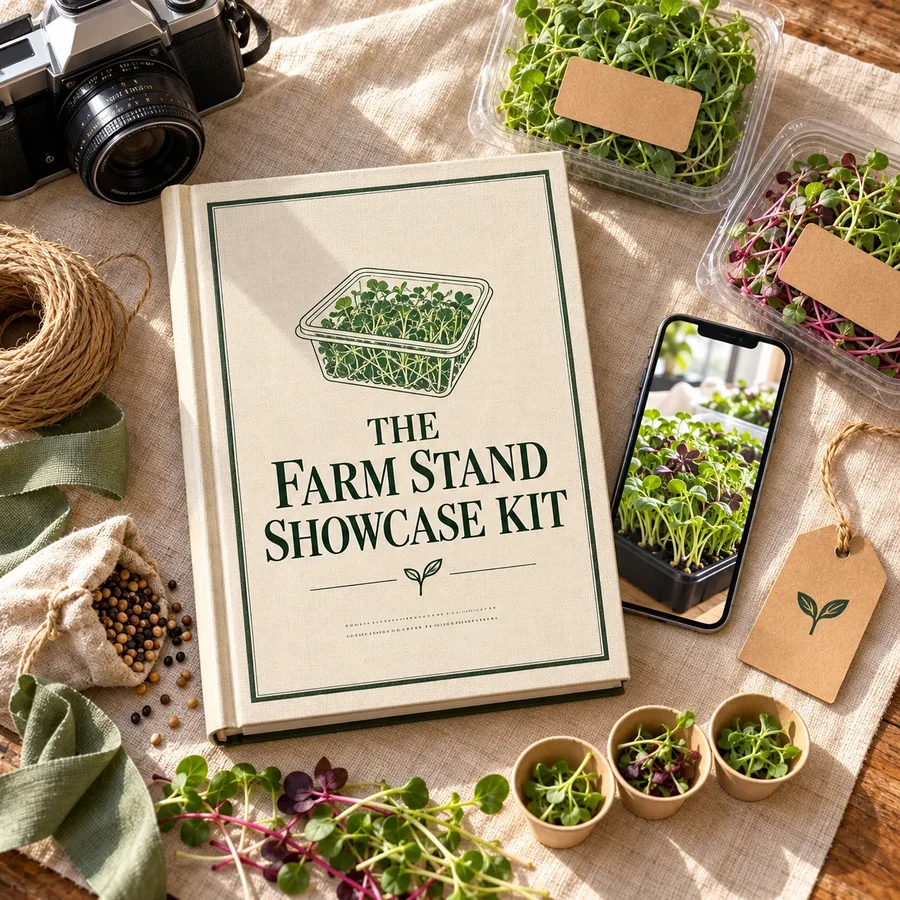
The visual half of selling: clamshell labels, sample cup cards and phone photos that hold up next to a store photo on the same screen. Nobody buys food from "a random person." This is how you stop being one.
Plus 5 more inside: Buy-This-Not-That Grow Setup List, Mold & Problem Fixer Checklist, Farmers Market Table Checklist, Weekly Planting & Delivery Planner, and Chef, Café & Neighbor Scripts with a simple order tracker.
One-time payment. Lifetime access.
The Sow-Grow-Sell Starter Kit
Plus 1 trip to the garden store for 2 trays, a bag of soil, seeds and a spray bottle. About $30, and a sunny window does the rest.
They were exactly where you are before they planted the first tray.
My kitchen shelf was basically decoration 😅
10:14 amGrew one tray of radish, posted it in my local group, and had 3 orders by the weekend 🤯
10:15 am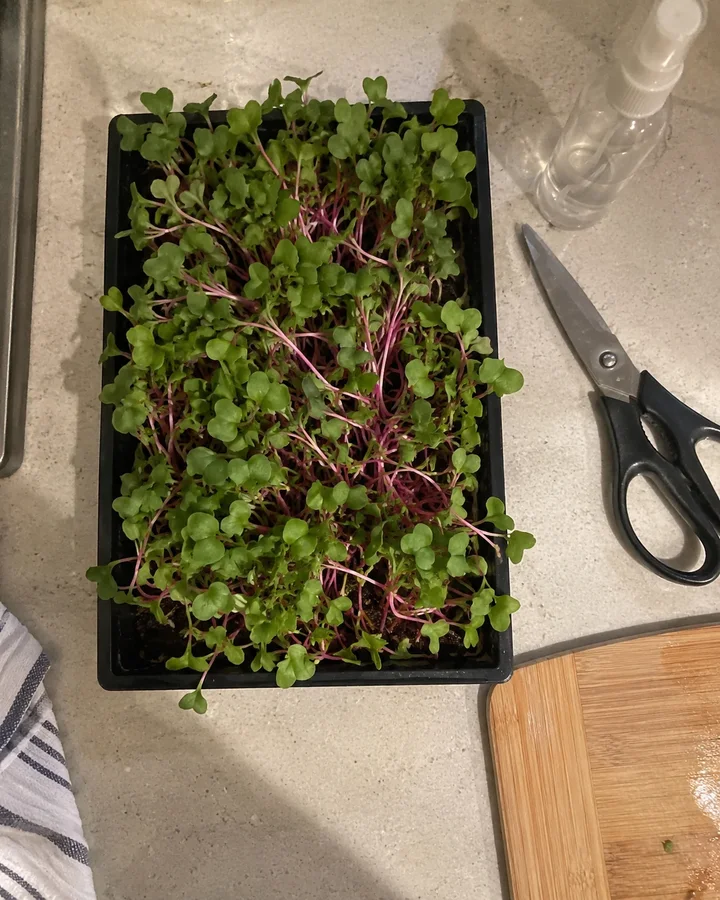
Megan they look amazing!! 😍 Taking weekly orders?
10:22 am ✓✓Already got 2 neighbors booked every Friday 🌱🥗
10:23 amThe pricing calculator was the part I really needed
2:05 pmI was about to charge $3 a clamshell 🙈 Now I know my costs and charge $6
2:06 pm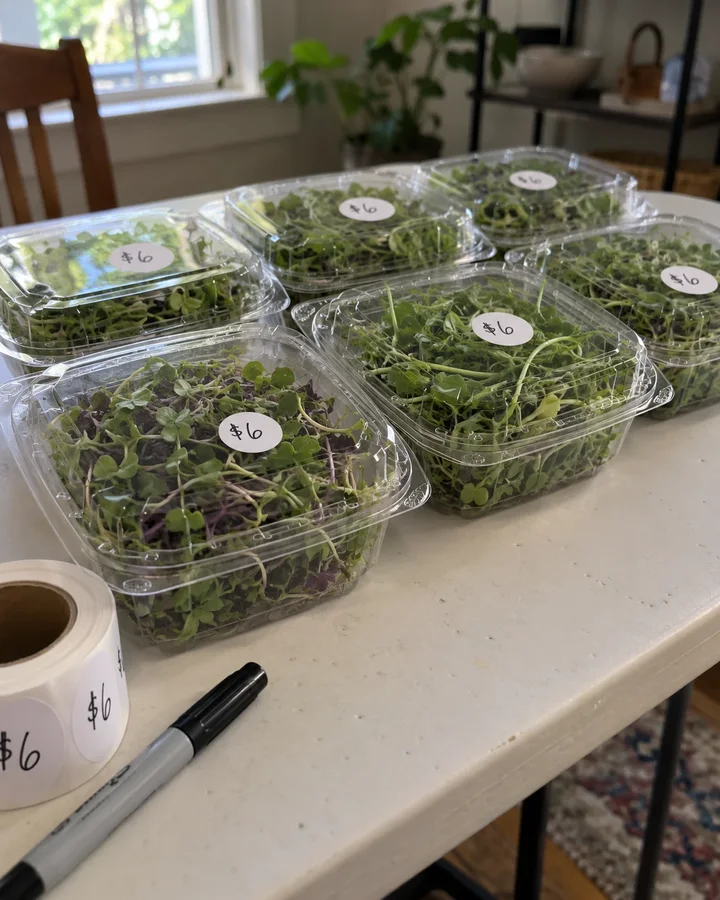
That's the whole game 🙌 Nice work Amanda!
2:15 pm ✓✓Made my kit money back on the first order tbh 😊
2:16 pmI retired in the spring and the afternoons dragged 😔
11:32 amNow I grow little weekly bags for the neighbors. The mold checklist gave me the confidence to start 🌿
11:33 am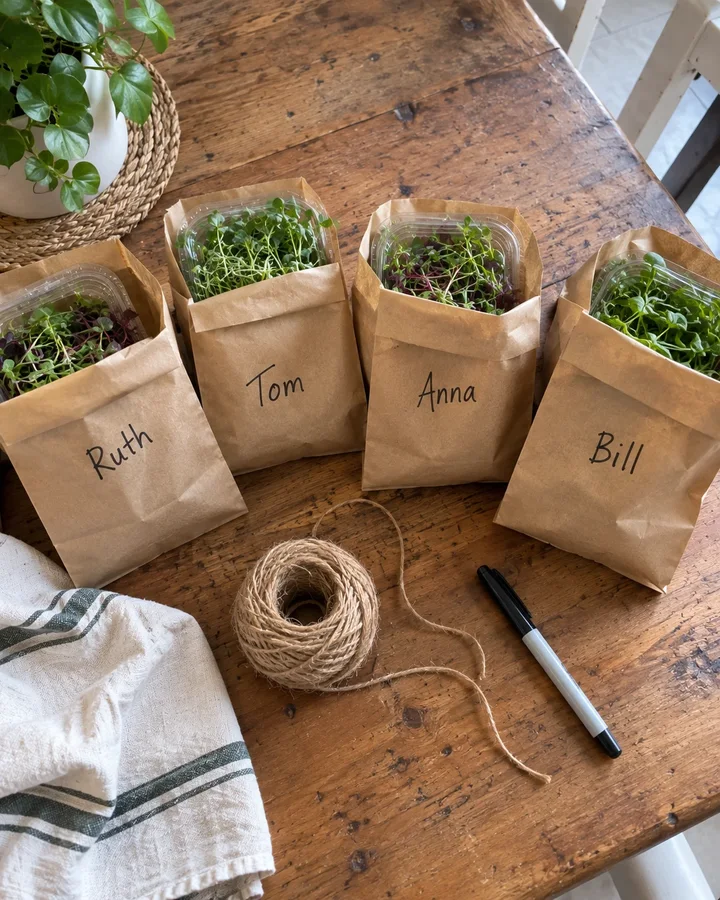
Diane these look so fresh 🥹 Lucky neighbors!
11:45 am ✓✓Best £20 I've spent in years honestly 💕
11:46 amWe know exactly what you're thinking: "if I could get just one weekly order, I'd know this can work." So that's all we ask. Try the full kit for just 7 days. Sow one small tray & offer it. The recipes, the fair price and the exact words to post are already done for you. If it doesn't fit your life, email us within 7 days and we refund you in full. You keep what you've downloaded. We part as friends.
Those are the honest ones. Everything you need for your first tray is in the kit, it opens tonight, and 7 days is more than enough to find out whether this is for you.
Get Instant Access →Here is the pattern in the people who get somewhere with this, and you already fit it. They are not expert gardeners and they are not "business people." They buy seeds the same week they decide to, and they sow the first tray that night. 1 tray, 1 price you can defend, 1 post. It is $27 once, you get it right now, and your first small order covers it. That is how a little extra income starts.
Yes, I am in for $27 →This is the Radish recipe, one of the 100+ recipes, exactly as it comes in the kit. Every recipe comes the same way.